

A skilled CPA saves business owners tens of thousands —or even in the six-figures — of dollars each year through proactive tax planning, strategic financial guidance, and improved decision-making. The greatest value often comes from year-round advisory services rather than annual tax preparation alone.
Most founders know they need a CPA, but the real question is whether that relationship is actually creating value for the business.
Many business owners judge their accountant by whether taxes are filed on time, but that’s only a small part of the picture. A proactive CPA for entrepreneurs should help reduce tax liability, improve cash flow, guide business decisions, and identify opportunities for growth throughout the year.
If your accountant only appears in March or April, you may be leaving significant money on the table. This guide provides a practical framework for evaluating how much your CPA is really saving your business and whether it’s time to expect more from your CPA firm.
What does a CPA actually do for business owners?
Many people think accountants simply prepare tax returns, but today’s best advisors provide strategic guidance that affects nearly every area of a business.
A quality CPA for entrepreneurs focuses on:
- Financial reporting
- Cash flow analysis
- Business strategy
- Entity selection
- Retirement planning
- Profitability analysis
- Risk management
- Tax planning
Rather than reacting to financial events after they happen, proactive professionals help founders make better decisions before money is spent or taxes are due.
Many growing businesses also pair their CPA with outsourced accounting services, creating a complete financial management solution that delivers timely reporting and strategic advice throughout the year.

A framework for measuring CPA value
If you’re wondering whether your CPA is earning their fee, consider these six areas.
1. Tax savings
The most obvious value comes from effective tax planning. Your advisor should identify deductions, credits, retirement strategies, depreciation opportunities, and timing strategies that legally reduce your tax liability.
If your CPA simply asks for your financials once a year and prepares returns, they’re likely missing planning opportunities.
2. Entity optimization
Business structures should evolve as companies grow. A knowledgeable CPA for entrepreneurs evaluates whether an LLC, S Corporation, partnership, or C Corporation remains the best fit for minimizing taxes and supporting growth.
LLC
An LLC is a Limited Liability Company. It’s one of the most popular structures for small businesses because it provides liability protection while offering flexible taxation. By default, profits and losses pass directly to the owners’ personal tax returns, avoiding corporate income tax. An LLC also elects to be taxed as an S Corporation or a C Corporation if doing so provides tax advantages.
S Corporation
An S Corporation is a tax election rather than a business entity itself. Eligible LLCs and corporations elect S Corp status, allowing profits to pass through to owners and potentially reducing self-employment taxes.
Partnership
A partnership is a business owned by two or more individuals who share profits, losses, and management responsibilities. Like an LLC, a partnership generally uses pass-through taxation, meaning the business itself doesn’t pay federal income tax. Instead, income flows to the partners’ personal returns according to the partnership agreement.
C Corporation
A C Corporation is a separate legal and taxable entity from its owners. It pays corporate income taxes, and shareholders may also pay taxes on dividends, often referred to as “double taxation.” However, C Corporations offer advantages for businesses seeking outside investors, issuing stock, or planning for significant long-term growth and reinvestment.
The best structure depends on factors like profitability, ownership goals, tax strategy, and future expansion plans. A qualified CPA can help you evaluate whether your current entity remains the most advantageous as the company evolves.
3. Cash flow improvements
Profit doesn’t always equal cash flow. Your CPA should help monitor receivables, expenses, inventory, and profitability trends to prevent cash shortages from becoming growth obstacles.
4. Better business decisions
The right financial data empowers founders to confidently make decisions rather than rely on gut instinct. While intuition plays a role in entrepreneurship, major business decisions should be backed by accurate numbers and forward-looking financial analysis.
A proactive CPA helps answer important questions such as:
- Can I afford another employee? Understanding payroll costs, projected revenue, and cash flow helps determine whether a new hire will strengthen the business or create unnecessary financial strain.
- Should I purchase new equipment? A CPA compares financing and leasing costs, estimates return on investment, and identifies potential tax advantages that could make the purchase more financially beneficial.
- Is expansion realistic? Whether opening a second location, launching a new product line, or entering a new market, financial projections help founders understand whether the business has the resources to support sustainable growth.
- Which service or product is most profitable? Revenue alone doesn’t tell the whole story. By analyzing margins, overhead allocation, and operating costs, a CPA identifies which areas of the business generate the highest profits and which may be underperforming.
This type of strategic guidance often delivers more long-term value than tax savings alone. Better decisions lead to stronger cash flow, higher profitability, and fewer costly mistakes, helping founders build healthier businesses for years to come.

5. Compliance and risk reduction
Staying compliant with tax and regulatory requirements is one of the most important yet often overlooked responsibilities of running a business. Mistakes with payroll taxes, estimated quarterly payments, sales tax filings, or year-end reporting quickly escalate into costly penalties, interest charges, and unnecessary stress.
Payroll taxes, in particular, are a common risk area. Misclassifying employees, missing deposit deadlines, or miscalculating withholdings trigger IRS penalties that compound over time. Similarly, underpaying estimated taxes throughout the year leads to surprise tax bills and penalty assessments, disrupting cash flow.
A proactive CPA firm helps businesses avoid these issues by building systems and processes that keep filings accurate and on time. This includes monitoring deadlines, calculating estimated payments based on real-time financial performance, and ensuring payroll and bookkeeping data are properly categorized and reconciled.
Beyond filing accuracy, strong compliance support also reduces audit risk. Clean, well-documented financial records make it easier to defend positions if questions arise from tax authorities.
A CPA who is actively involved throughout the year also identifies red flags early before they become larger problems.
6. Year-round financial strategy
Perhaps the biggest differentiator in how much value a business gets from its accounting relationship is whether it includes consistent, year-round guidance. Too many founders operate with financial blind spots for months at a time, only discovering problems when tax season arrives. By then, opportunities for optimization have often already passed.
Businesses that use outsourced accounting services typically receive much more proactive support. Instead of waiting for annual filings, they benefit from monthly financial reporting that shows exactly how the business is performing in real time. This includes income statements, balance sheets, cash flow reports, and KPI tracking that help founders understand trends as they develop.
Why proactive financial guidance matters
The best CPAs become strategic business advisors.
Benefits include:
- Lower overall tax liability through proactive tax planning
- Improved cash flow management
- Better forecasting
- Increased profitability
- Stronger financial reporting
- Reduced compliance risk
- Better financing opportunities
- More confident decision-making
When combined with outsourced accounting services, founders gain timely financial information that supports year-round growth rather than only during tax season.
Common mistakes to avoid making
Many founders unknowingly limit the value they receive from their accounting relationship.
Common mistakes include:
- Only meeting with your CPA once per year
- Waiting until tax season to discuss major purchases
- Choosing the cheapest CPA firm instead of the most strategic one
- Ignoring monthly financial statements
- Skipping quarterly tax planning meetings
- Managing bookkeeping internally when outsourced accounting services would provide greater accuracy and insight
Avoiding these mistakes often leads to significant long-term savings.
Data and research insights
| Research Insight | Impact |
| Strategic tax planning often saves $1M+ businesses six figures annually | Reduces overall tax burden |
| Businesses with regular financial reporting make faster decisions | Improves growth opportunities |
| Outsourced finance teams reduce administrative workload | Frees owners to focus on operations |
| Quarterly advisory meetings improve forecasting accuracy | Better budgeting and cash management |
The greatest value from a CPA for entrepreneurs often comes from financial strategy rather than compliance alone.
Recommended tools and resources
Business owners maximize CPA value by using:
- Cloud accounting software
- Cash flow forecasting dashboards
- KPI reporting systems
- Monthly financial review meetings
- Budget tracking software
- Payroll management platforms
- Outsourced accounting services for bookkeeping support
- Quarterly tax planning sessions with a trusted advisor
When paired with strategic advice, technology creates a much stronger financial foundation than software alone.
FAQ
How much does a CPA save a business owner?
Savings vary with revenue and complexity, but proactive tax strategies and advisory services often save business owners six figures annually and improve profitability through better financial decisions.
Is hiring a CPA worth it for small businesses?
Yes. A CPA for entrepreneurs provides value through tax strategy, financial reporting, compliance, and business advisory services that often exceed the cost of engagement.
What’s the difference between bookkeeping and outsourced accounting services?
Bookkeeping records transactions, while outsourced accounting services often include financial reporting, reconciliations, payroll support, budgeting, forecasting, and management insights that help owners make informed decisions.
How often should I meet with my CPA?
Many experts recommend quarterly meetings to discuss business performance, projected taxes, cash flow, and upcoming strategic decisions rather than waiting until filing season.
When should I switch CPA firms?
If your current CPA firm only prepares tax returns and offers little proactive advice, strategic planning, or communication throughout the year, it may be time to evaluate other options.

Ready to Get More Value From Your CPA? Contact STRIV today.
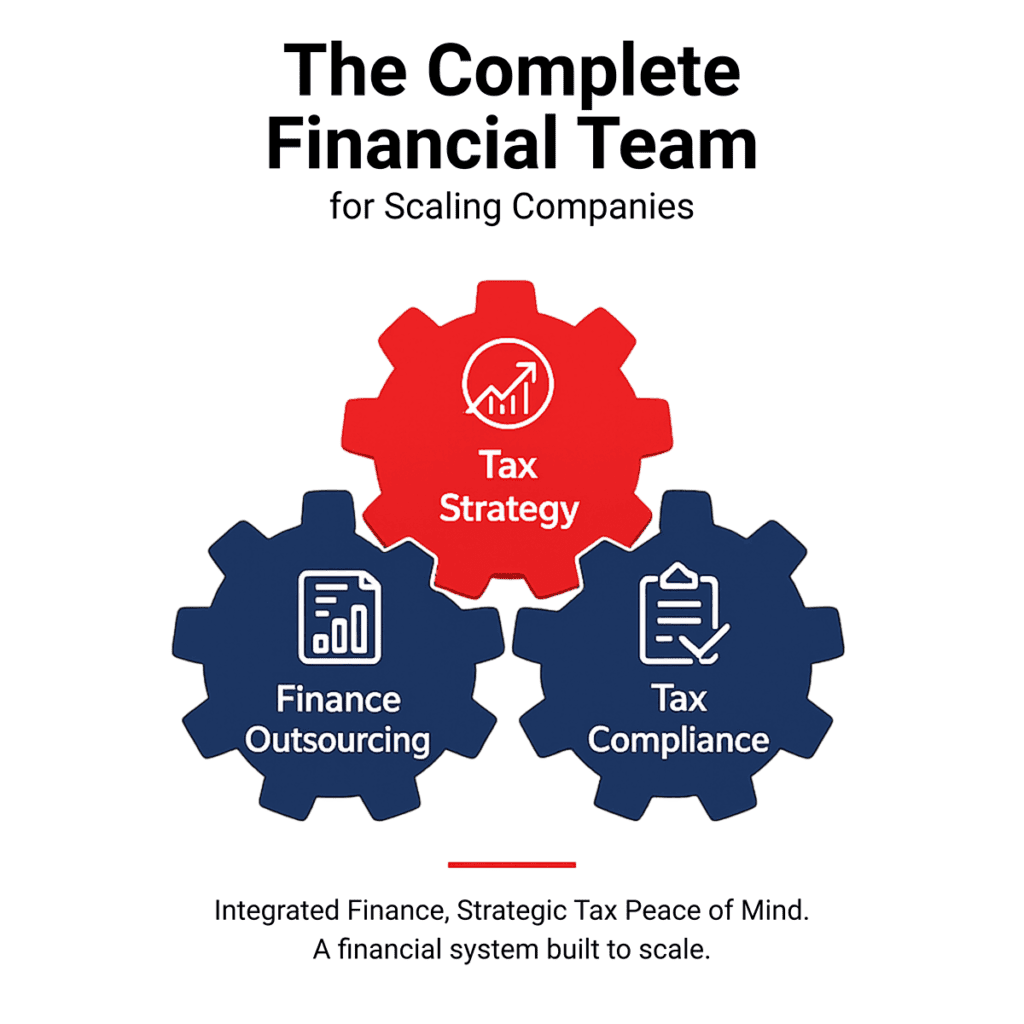
Your CPA should help your business grow. With proactive tax planning, strategic financial guidance, and year-round advisory services, the right accounting partner helps you improve cash flow, reduce tax liability, and make more confident business decisions.
At STRIV CPAs, we work alongside entrepreneurs and business owners to provide personalized accounting solutions that go beyond compliance. Whether you need a tax strategy, outsourced accounting services, bookkeeping support, or ongoing business advisory, our team is committed to helping you maximize every financial opportunity.
Are you ready to find out how much your CPA could be saving you? Contact STRIV CPAs today to schedule a consultation and discover a smarter approach to managing your business finances.