

Every entrepreneur eventually learns the same lesson: the IRS doesn’t wait until April to collect. Once income stops flowing through an employer’s payroll system, the responsibility for staying current shifts entirely to the business owner, and missing a deadline means real money in penalties and interest.
This guide walks through how quarterly estimated taxes work and how proactive tax planning turns a recurring headache into a routine part of running the business.
What are quarterly estimated taxes?
Quarterly estimated taxes are payments entrepreneurs make directly to the IRS throughout the year to cover income tax and self-employment tax that an employer would otherwise withhold.
Sole proprietors, partners, S corporation shareholders, and freelancers generally fall into this category, since none of them has a payroll system handling withholding on their behalf.
The trigger is straightforward: anyone who expects to owe $1,000 or more in federal tax for the year, after subtracting withholding and refundable credits, generally needs to make estimated payments. For entrepreneurs, this is a structural requirement of the U.S. tax system for collecting revenue from income that isn’t tied to a paycheck.
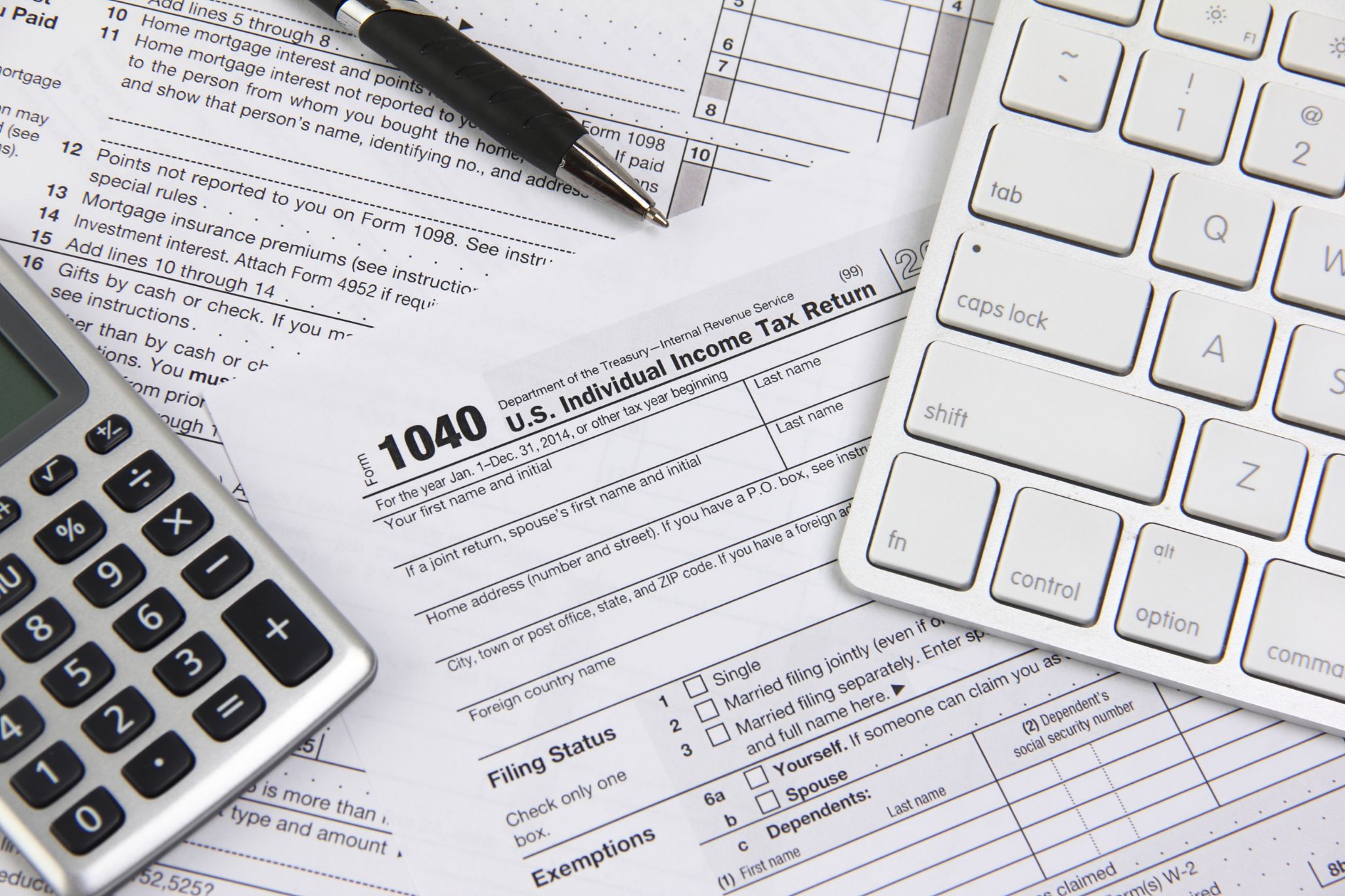
How to calculate and pay your quarterly taxes
Most entrepreneurs use one of two methods to figure out what they owe each quarter.
1. Prior-year safe harbor
This is the simpler and more common approach. Take the total tax owed on last year’s return and pay 100% of that amount, split into four equal installments. If prior-year adjusted gross income exceeded $150,000, the threshold rises to 110%.
Because the target is a known number from a filed return, this method removes most of the guesswork and is a reliable default for tax planning purposes, even in a growth year.
2. Current-year projection
This method estimates the current year’s income, deductions, and tax liability using Form 1040-ES. It produces a more accurate number, particularly if income has dropped from the prior year, but it requires updated financial data each quarter and carries more risk if income is underestimated.
Once the amount is set, here’s the process:
- Total the tax owed, using either method above, including both income tax and self-employment tax.
- Divide by four to get the standard quarterly installment (adjusting later payments if income is seasonal).
- Submit payment by the due date, using IRS Direct Pay, EFTPS, or a check mailed with the Form 1040-ES voucher.
- Recalculate if income shifts materially, since a strong Q3 after a slow Q1 may call for a larger Q4 payment.
- Keep records of each payment, since you’ll need these figures when reconciling the final return; these are also often requested during tax compliance services engagements.
The discipline of doing it four times a year, on time, every year, is where most entrepreneurs need support.
An example scenario
The following is an illustrative scenario, not a real client case.
Consider a founder running a services business that cleared a little under $2 million in revenue last year, up sharply from the year before.
Her CPA calculated her prior-year tax liability and set her quarterly payments using the safe harbor method, so her installments stayed fixed even as current-year revenue kept climbing. Midway through the year, a large contract closed earlier than expected, pulling a significant amount of income into a single quarter.
Because her tax planning was already built around the safe harbor number rather than a moving current-year estimate, the early contract didn’t require a scramble to recalculate her payment. She still set aside additional funds against her actual current-year liability so that the eventual tax bill wouldn’t come as a surprise.
The safe harbor approach keeps the required payment steady even when revenue fluctuates.
Why this matters for entrepreneurs
Staying current on quarterly payments protects a founder’s relationship with the IRS and its cash flow.
- Avoids penalty and interest accumulation: Underpayment penalties compound from the missed due date until the balance is paid, adding an avoidable cost on top of the tax itself.
- Prevents a year-end cash crunch: Spreading the liability across four payments keeps a single tax bill from landing all at once against working capital.
- Supports more accurate financial forecasting: Founders who build estimated payments into their models get a clearer read on actual free cash flow.
- Reduces reliance on last-minute scrambling: Entrepreneurs working with outsourced accounting services often have these calculations handled proactively each quarter, rather than reconstructed under deadline pressure.
- Keeps the business in good standing: Consistent, on-time payments are a core part of tax compliance services and reduce the odds of IRS scrutiny down the line.
For a scaling business, this is about treating tax obligations as a predictable, planned-for expense rather than a recurring emergency.
Common mistakes to avoid
- Confusing profit with available cash: A profitable quarter on paper doesn’t always mean the cash is sitting in the bank when the payment is due, especially if receivables are outstanding.
- Using the wrong safe harbor threshold: Founders whose prior-year AGI exceeded $150,000 sometimes apply the 100% threshold instead of the required 110%, underpaying without realizing it.
- Treating the “quarters” as three equal months: The IRS periods are uneven, and assuming each covers exactly three months leads to miscalculated installments.
- Skipping tax planning after a strong growth year: A safe harbor payment based on last year’s numbers can result in a large true-up at filing time if current-year income has grown substantially.
- Waiting until the deadline to reconcile books: Without current financials, it’s difficult to know whether the current-year projection method would produce a more accurate number than the safe harbor default.
- Assuming outsourced accounting services aren’t necessary until the business is larger: Many of these mistakes are the exact gaps that ongoing tax compliance services are built to catch before a deadline passes.
2026 deadlines and penalty rates
For calendar-year entrepreneurs, the 2026 payment schedule runs April 15, June 15, and September 15, 2026, followed by January 15, 2027, with each date shifting to the next business day if it falls on a weekend or holiday. These periods aren’t evenly spaced three-month blocks, which is why relying on a calendar reminder set for “every three months” often produces the wrong payment date.
The cost of missing one of these dates is tied to a rate that moves quarterly. For the quarter beginning April 1, 2026, the underpayment interest rate for individuals was set at 6%, tied to the federal short-term rate plus three percentage points.
That rate compounds daily and begins accruing from the missed due date, not from the eventual filing date, which means a payment that’s a few months late carries heftier penalties.
Where outsourced support fits
Many entrepreneurs handle their own quarterly calculations for the first year or two, then hand the process off once revenue and complexity grow.
Outsourced accounting services typically take over the safe harbor and current-year projection calculations, track payment deadlines, and flag when a strong quarter warrants a recalculation before the next due date arrives.
This shifts the estimated tax process from a task the founder remembers to do to a system that runs in the background of the business. For a scaling company, that shift often matters more than the calculation itself.
FAQ
Q: How often do entrepreneurs need to pay estimated taxes?
Entrepreneurs must pay their estimated taxes four times per year, on IRS-set dates that don’t align with standard calendar quarters. For 2026, payments are due April 15, June 15, September 15, and January 15, 2027, regardless of when the business’s fiscal year begins.
Q: What happens if a payment is missed?
The IRS begins charging interest on the unpaid amount from the original due date, compounding daily until the balance is paid in full. The rate adjusts quarterly, so the cost of a missed payment isn’t fixed year to year.
Q: Which calculation method is better: safe harbor or current-year projection?
It depends on the business. Safe harbor offers predictability and protection from penalties, while current-year projection can be more accurate for a business with declining income. A tax compliance services provider can help determine which tax year applies.

Q: When does it make sense to bring in outsourced accounting services for this?
Once quarterly calculations require updated financials, multiple income sources, or a recalculation after a strong quarter, outsourced accounting services can maintain the schedule and catch adjustments before a deadline passes rather than after.
Stop guessing at your quarterly taxes with STRIV CPAs
Quarterly estimated taxes don’t have to be a recurring source of stress. With the right tax planning approach and a clear read on current deadlines and penalty rates, entrepreneurs can treat these payments as a predictable part of running the business rather than a quarterly scramble.
If your quarterly calculations are starting to outpace what you can track manually, our team can help you build a system that keeps you current every quarter without last-minute guesswork. Contact STRIV CPAs today to get started.